The Year of MCP
When Anthropic introduced the Model Context Protocol (MCP) in November 2024, few predicted how quickly it would become the industry standard. By January 2026, MCP has evolved from an experimental protocol to the universal connector for AI systems worldwide.
What is MCP?
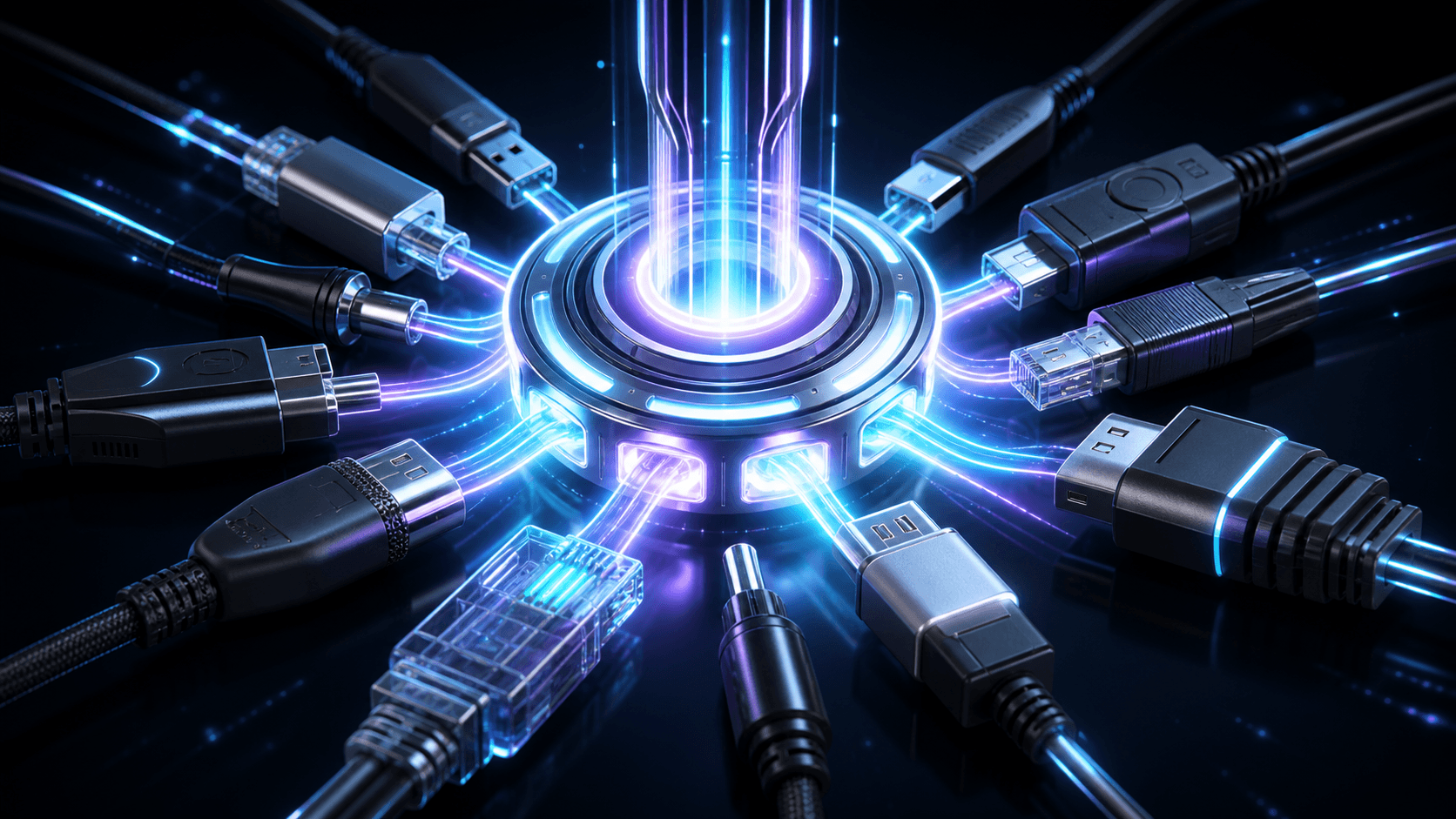
MCP is an open standard that defines how AI systems connect to external tools, data sources, and services. Think of it as USB for AI tools—a standard protocol that lets any tool connect to any AI agent.
The MCP Primitives
MCP defines four core primitives:
- Resources - Read-only data access (files, database rows, API outputs)
- Tools - Actions the agent can perform (create issue, send email)
- Prompts - Reusable prompt templates for complex tasks
- Sampling - Server can request LLM completions from the client
2026: The Enterprise Tipping Point
Industry Adoption Timeline
- Nov 2024: Anthropic introduces MCP
- Mar 2025: OpenAI adopts MCP across products
- Apr 2025: Google DeepMind confirms Gemini MCP support
- Jul 2025: MCP v1.0 stability release
- Oct 2025: Linux Foundation hosts MCP
- Jan 2026: 40% enterprise adoption projected (Gartner)
Who's Using MCP?
AI Providers: Anthropic (Claude), OpenAI (ChatGPT, Codex), Google DeepMind (Gemini), Hugging Face, LangChain ecosystem
Enterprise Platforms: Microsoft Semantic Kernel, Azure OpenAI, AWS Bedrock, Cloudflare AI
New Features in MCP 2026
Open Governance
MCP has transitioned to open governance under the Linux Foundation with Technical Steering Committee, Working Groups, and transparent decision-making.
MCP Tool Search (Lazy Loading)
One of the most impactful 2026 features—tools are loaded only when needed based on conversation. Token usage dropped from ~134k to ~5k in Anthropic's testing.
Streamlined Transport
Multiple transport options: stdio (local), http (remote), websocket (real-time), SSE (server-sent events).
Popular MCP Servers in 2026
Official Servers:
- @modelcontextprotocol/server-filesystem
- @modelcontextprotocol/server-github
- @modelcontextprotocol/server-postgres
- @modelcontextprotocol/server-slack
- @modelcontextprotocol/server-memory
Community Servers:
- mcp-server-jira
- mcp-server-confluence
- mcp-server-aws
- mcp-server-kubernetes
- mcp-server-linear
The Future: Intent Layer
The next frontier for MCP (projected 2026-2027) is the Intent Layer that will allow agents to:
- Communicate high-level goals
- Negotiate with other agents
- Choose optimal tools dynamically
- Adapt to changing requirements
Enterprise Deployment Patterns
Pattern 1: Gateway Architecture
MCP Gateway handles authentication, rate limiting, audit logging, and load balancing for multiple MCP servers.
Pattern 2: Sidecar Deployment
Deploy MCP server as a sidecar container alongside your AI agent in Kubernetes.
Pattern 3: Service Mesh Integration
Integrate MCP with Istio or similar service mesh for mTLS and observability.
Security Best Practices
- Principle of Least Privilege: Use tokens with minimal scopes
- Sandbox External Operations: Restrict filesystem access to project root
- Audit Trail: Log all MCP operations for compliance
Conclusion
MCP has transformed from a promising protocol to the universal language of AI agents. Its adoption by major AI providers, transition to open governance, and enterprise-ready features make it the clear standard for 2026 and beyond.
Whether you're building AI applications, deploying enterprise agents, or creating integrations, MCP is the foundation you need to master.
Need help implementing MCP in your organization? Let's talk about your integration needs.